2026/10/30
Prolonged Five-Year Recovery After Robotic Sympathetic Trunk Reconstruction Following Endoscopic Thoracic Sympathectomy: A First-Person Account
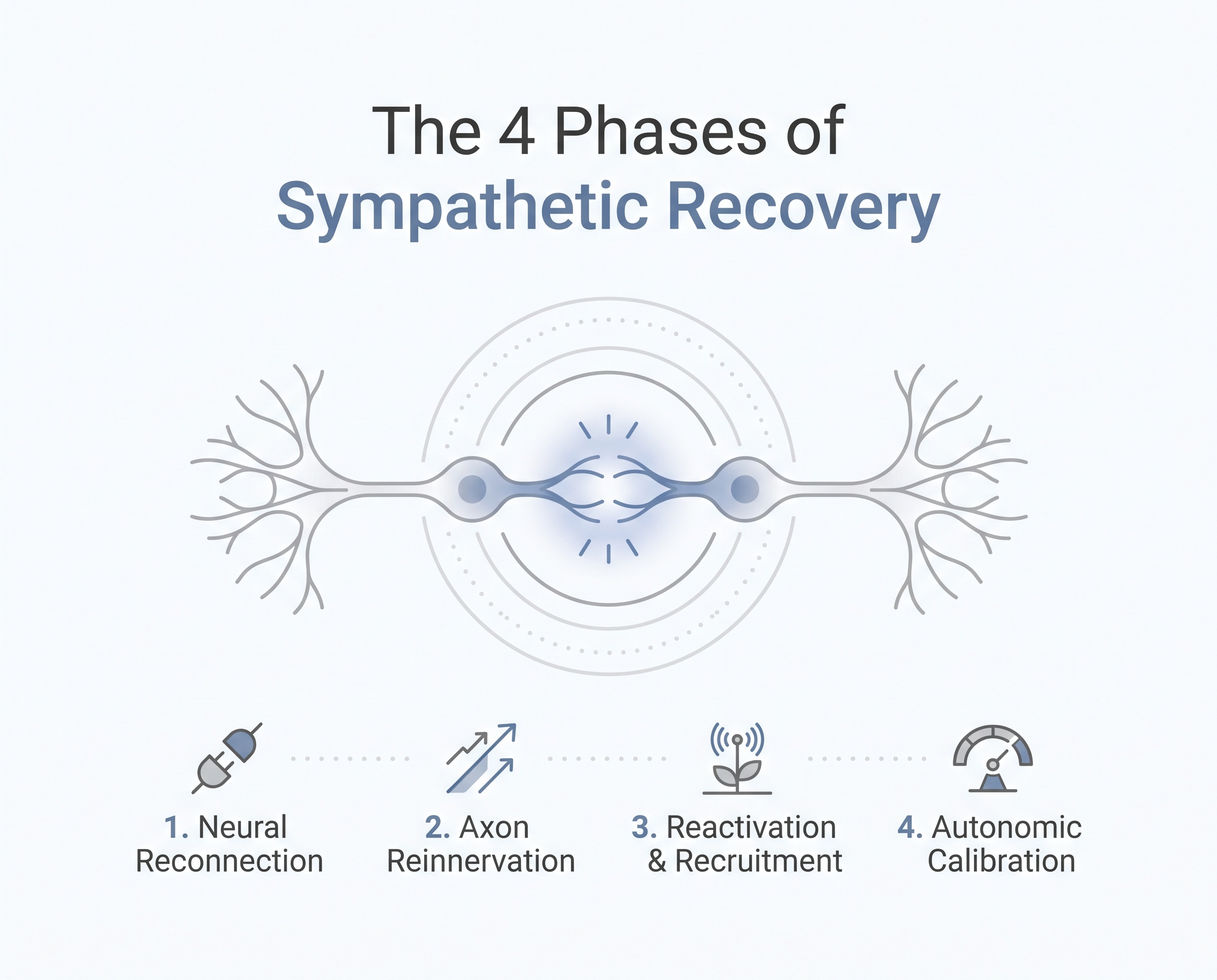
We publish this Perspective because the literature on sympathetic trunk reconstruction is small, largely surgeon-written, and short on long-term follow-up. A radiologist reports on himself across five years; the largest prospective series stops at two. Three things struck us. First, reconstruction came 27 years after sympathectomy and function returned. Long-standing denervation did not foreclose recovery. Second, his largest gains came in years four and five, long after axons should have crossed the grafts. If that holds in others, two-year outcomes are being read too early, with consequences for counseling and defining failure. Third, his course was not confined to sweating: skin, vasomotor, and ocular changes came and went over those years, and the sympathetic trunk may matter to more than sudomotor function. These are one man’s self-rated observations, not evidence of efficacy or a basis for treatment decisions. Whether they hold awaits independent, standardized follow-up of larger cohorts.